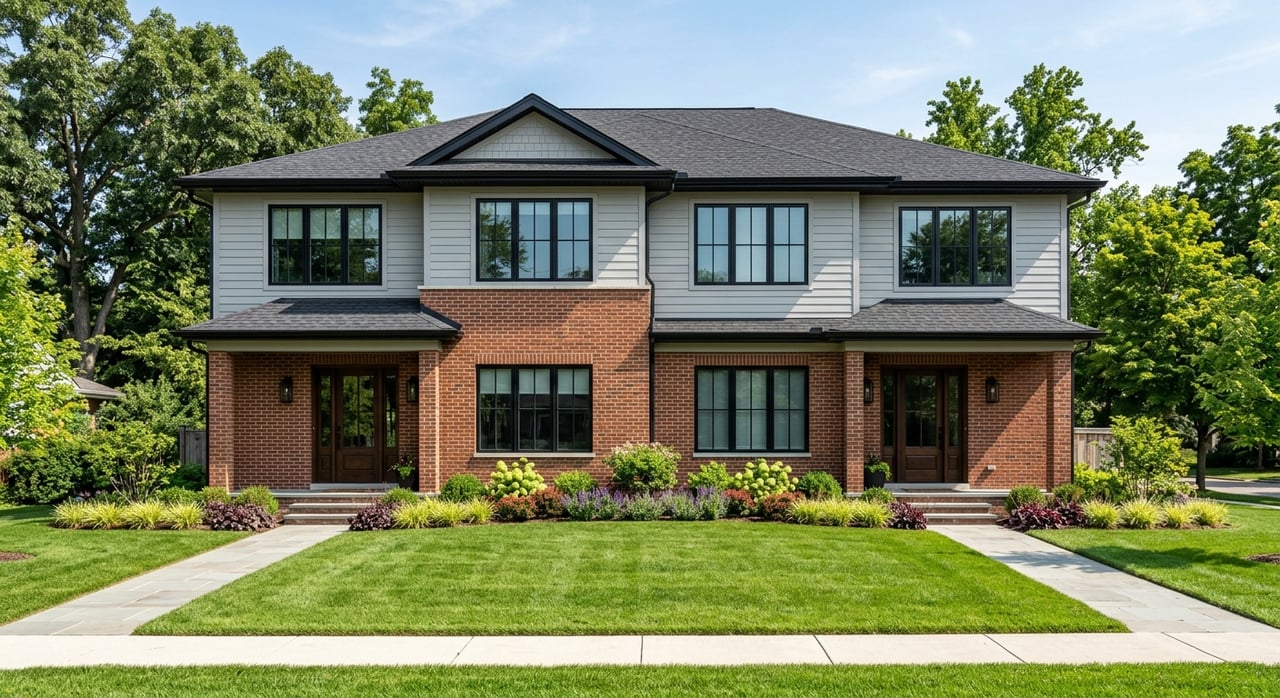
If you are thinking about buying a duplex in Montgomery County, the numbers need to work on paper before they ever face the real world. In a market where duplexes make up only a small share of the housing stock, it is easy to get overly optimistic on rent, underestimate reserves, or miss a municipality-specific rule that changes the deal. This guide will show you how to underwrite a duplex in Montgomery County with a practical, lender-aware approach so you can screen deals more confidently. Let’s dive in.
Start With Montgomery County Reality
Montgomery County is a mostly owner-occupied suburban market with relatively strong household incomes. According to Census QuickFacts for Montgomery County, the median household income is $113,915, the owner-occupied housing unit rate is 71.4%, and median gross rent is $1,683.
That matters because duplex investing here is not the same as underwriting in a dense, renter-heavy market. The county’s 2025-2029 Consolidated Plan reports that only 6% of residential properties are in the 2-4 unit category. In plain terms, true duplex comps can be harder to find, so your underwriting has to lean on defensible rent data and realistic expense assumptions.
Confirm Zoning and Rental Legality First
Before you look at cash flow, confirm that the property can legally operate the way you expect. Montgomery County notes that land use and development rules are set by local municipalities, not by one countywide standard, and the same county planning document describes strict zoning, limited buildable land, and pushback around added density as real housing constraints.
For you, that means a duplex in one municipality may not be treated the same way as a similar building in another. If the deal depends on a certain unit count, rental use, or future improvement plan, verify that early. A strong-looking pro forma does not help if the use is restricted or nonconforming.
Build Rent From Public Benchmarks
A good duplex underwriting model starts with income, but not with wishful thinking. In Montgomery County, public rent data gives you a useful screening range before you tighten the number with property-specific comps.
The county’s Consolidated Plan reports a 2023 median contract rent of $1,617 and a 2-bedroom Fair Market Rent of $1,802. Census QuickFacts shows median gross rent of $1,683. Together, those figures suggest a rough initial screening band of about $1,600 to $1,800 per month per typical unit, before you refine the estimate with actual local comparables.
Use Benchmarks as a Screen, Not a Final Answer
Public numbers are a starting point, not your final rent conclusion. HUD explains that Fair Market Rents are used for voucher payment standards and other program rent ceilings, so they are helpful for context but are not a substitute for direct market comps.
That distinction matters even more in Montgomery County, where duplex inventory is limited. If you assume top-of-market rent without enough support, you can make a weak deal look stronger than it really is.
Default to the More Defensible Rent
When you have a range, use the lower and more supportable number in your screening model. Since duplex rent comps may be thin, conservative underwriting gives you more room for error. If the deal still works at a lower rent estimate, you are in a much safer position.
Know What Lenders Will Want to See
If you are financing the duplex, your underwriting should reflect how lenders view 2-4 unit properties. Fannie Mae says the appraisal for two- to four-unit properties must include the income approach, supporting comparable rental and sales data, and gross rent multiplier calculations.
That means rent support is not optional. Even if a property is vacant or partially vacant, the file still needs credible comparable rent analysis.
Freddie Mac also states that comparable rent data is needed to support rental-income stability, and in some cases Form 72 or Form 1000 may be used when lease data is unavailable. In practical terms, you should expect your lender and appraiser to care about whether the projected income is stable and supported, not just whether the listing says the numbers work.
Duplexes Carry More Risk Than One-Unit Homes
Fannie Mae’s risk-factor guidance notes that underwriting considers equity and loan-to-value ratio, liquid reserves, occupancy type, debt-to-income ratio, housing expense, and property type. It also states that investor loans carry the highest risk level and that two- to four-unit properties are riskier than one-unit properties.
So when you underwrite a duplex, do not stop at rent minus mortgage. You also need to ask whether the deal leaves you with enough cash after closing, whether reserves are adequate, and whether the numbers still hold up if rent comes in below your target.
Model Vacancy the Right Way
One of the fastest ways to overstate cash flow is to assume full occupancy all year. Montgomery County’s Consolidated Plan reports a 5.7% rental vacancy rate, and the same research notes DVRPC reported 6.3% for the county in 2022.
Those are balanced-market type numbers, not zero-vacancy numbers. So your underwriting should include a meaningful vacancy or credit-loss line item. If the property only works when both units are fully occupied every month at top rent, that is a warning sign.
Underwrite Expenses Parcel by Parcel
Expenses are where many first-pass duplex models fall apart. A clean rent number does not mean much if you have not built the expense side realistically.
Tax Assumptions Need to Be Specific
In Montgomery County, property taxes vary by location. The county publishes separate county, MCCC, municipal, and school millage rates, and total millage can vary widely by municipality.
That means you should not use a countywide average tax shortcut. Underwrite taxes for the actual parcel and municipality, because a wrong tax assumption can materially change monthly cash flow.
Include True Operating Costs
Fannie Mae’s rental-income guidance says regular ongoing costs such as maintenance, advertising, management fees, utilities, HOA dues, and supply costs should be deducted from cash flow. Extraordinary expenses may require separate adjustments.
For a duplex screening model, that means your expense stack should usually include:
- Property taxes
- Insurance
- Vacancy or credit loss
- Maintenance
- Property management
- Utilities you are responsible for
- HOA dues, if applicable
- Turnover and supply costs
- Capital reserve line items
Even if you plan to self-manage, it is smart to test the deal with a management expense. That gives you a clearer picture of whether the property works as an investment, not just as a part-time job.
Give Extra Weight to Capital Reserves
Montgomery County’s housing stock is older than many buyers expect. The county plan reports that 72.5% of housing units were built before 1990, and nearly half were built before 1970.
For a duplex, older stock means reserves matter. Roofs, HVAC systems, plumbing, electrical work, and unit turnover costs can all hit your returns faster than a simple spreadsheet suggests. A deal that looks great before reserves can look far less attractive after you account for real-world aging systems.
Focus on the Big Repair Buckets
When you screen a duplex in this market, give special attention to:
- Roof age and condition
- HVAC age and service history
- Plumbing updates or known issues
- Electrical panel and wiring condition
- Window condition
- Turnover and make-ready costs between tenants
If you do not have strong confidence in the building systems, your reserve assumptions should go up, not down.
Use a Simple Duplex Screening Formula
You do not need a fancy model to screen a deal well. You need a disciplined one.
A practical screening flow in Montgomery County looks like this:
- Confirm the municipal zoning and legal use.
- Estimate market rent using public benchmarks and local comps.
- Use the lower, more defensible rent in your pro forma.
- Subtract realistic operating expenses, including vacancy and reserves.
- Compare the result against your financing terms, cash-to-close, and post-closing reserves.
- Stress-test the deal at lower rent or higher repairs.
If the property still performs after those steps, it may deserve a deeper look. If it only works with best-case assumptions, move carefully.
Watch for Fragile Deals
A fragile deal usually has one or more of the same problems. Rent assumptions are aggressive, vacancy is set too low, taxes are estimated too loosely, and reserves are too thin for an older building.
In Montgomery County, those mistakes can be especially costly because duplex inventory is limited and municipal differences matter. If you need full occupancy, top-of-range rent, and zero repair surprises just to break even, that is not strong underwriting. That is hope.
Why Conservative Underwriting Wins
The goal of underwriting is not to prove that a deal works. The goal is to see whether it still works when real life shows up.
In Montgomery County, conservative underwriting means respecting thinner duplex comps, municipality-specific rules, variable tax burdens, balanced vacancy levels, and older housing stock. If you stay disciplined on those variables, you will make better buy decisions and avoid chasing deals that look stronger online than they are in reality.
If you are evaluating a duplex or another multi-family opportunity in Montgomery County, working with an agent who understands local housing dynamics, financing pressure points, and deal structure can save you time and protect your downside. To talk through a property, underwriting assumptions, or your acquisition strategy, connect with Gregg Kravitz.
FAQs
What rent should you use when underwriting a duplex in Montgomery County?
- A reasonable public-data screening range is about $1,600 to $1,800 per month for a typical unit, based on county and Census benchmarks, but you should tighten that estimate with local comparable rents and use the lower supportable figure in your pro forma.
Why are duplex rent comps harder to find in Montgomery County?
- Montgomery County is mostly owner-occupied, and the county reports that only 6% of residential properties are in the 2-4 unit category, so true duplex comparables may be thinner than single-family comps.
How should you estimate vacancy for a Montgomery County duplex?
- You should include a meaningful vacancy or credit-loss assumption because the county reports a 5.7% rental vacancy rate, and balanced-market conditions do not support assuming zero vacancy.
Why do property taxes vary so much for duplexes in Montgomery County?
- Total tax burden can differ widely by municipality because the county publishes separate county, MCCC, municipal, and school millage rates, so taxes should be modeled for the specific parcel rather than with a broad average.
What do lenders care about when financing a Montgomery County duplex?
- Lenders typically care about supported rent estimates, reserves, loan-to-value ratio, occupancy type, debt-to-income ratio, and the added risk tied to 2-4 unit properties, so your underwriting should account for more than just headline rent and mortgage payment.
Why are capital reserves so important for older duplexes in Montgomery County?
- The county reports that 72.5% of housing units were built before 1990, so older roofs, HVAC systems, plumbing, electrical components, and turnover needs can have a major impact on cash flow and should be reserved for upfront.